$0.00 0

Cart

No products in the cart.

Critical Path

Explore Solutions

Each solution is aligned to a step in the Critical Path. First, identify which step best matches your situation, then explore the solutions designed to help you move forward

STEP 1

First Things First

Dealing with immediate loss or damage?
Start by securing your safety, preventing further damage, stabilizing your living situation, and begin documenting your claim.

Use Cases

  • Windstorm damage to your roof exposes the interior of your home to the elements. You need emergency repairs immediately.
  • A broken water line floods your home.  You shut off the utilities, then coordinate water removal and clean-up to prevent mold.
  • Your kitchen catches fire and heavy smoke fills the entire house.  You want professional guidance to know what can be saved.

STEP 2

Report Your Claim

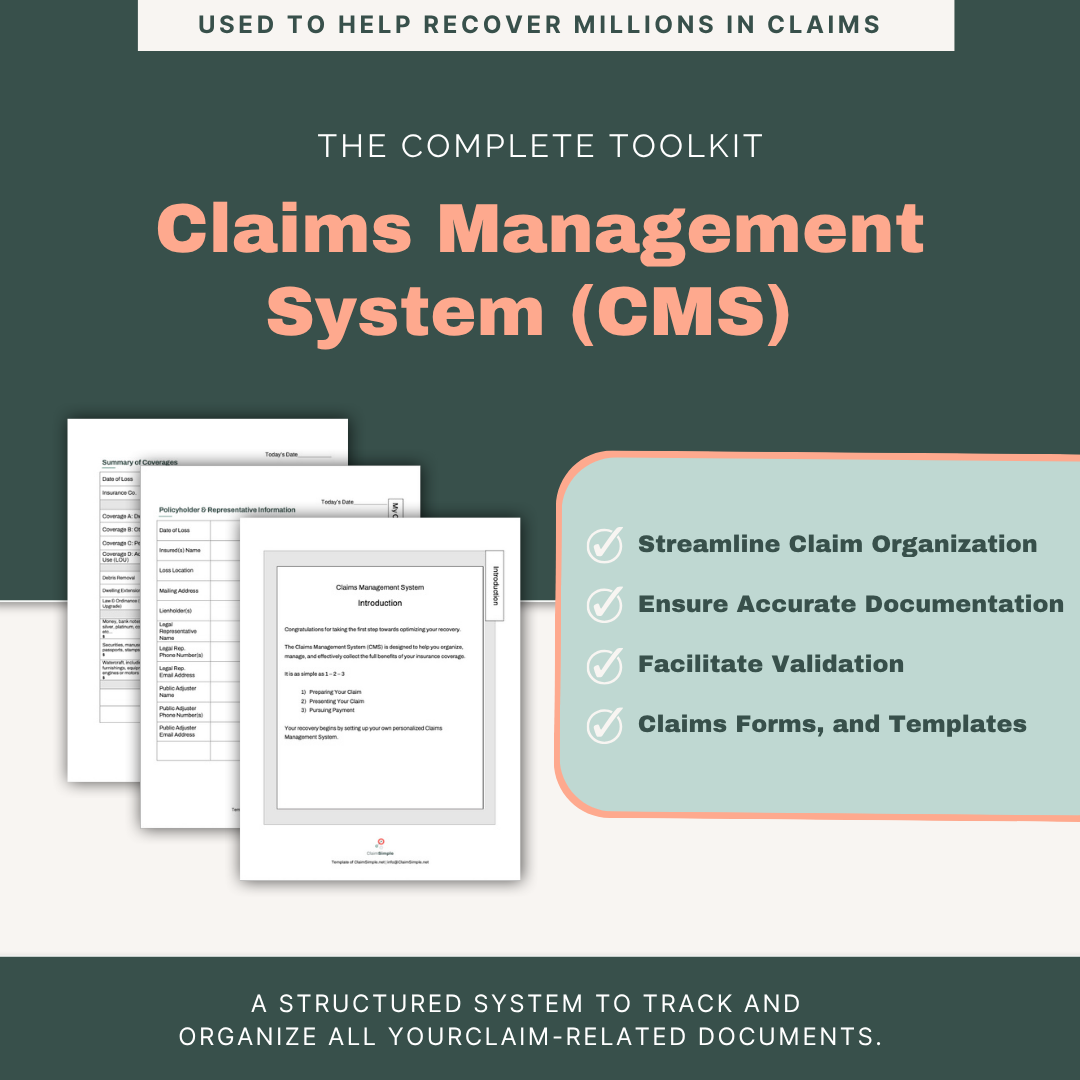
Report your insurance claim with confidence, clarity, and a complete set of relevant information.

Use Cases

  • You have never filed an insurance claim.  You are unsure what (and how much) to tell the insurance company.
  • You inform your insurance agent that you suffered a loss, but does that qualify as a formal notification of your claim?
  • How you describe the circumstances of your loss may determine whether your claim is covered by insurance.

STEP 3

Document Your Claim

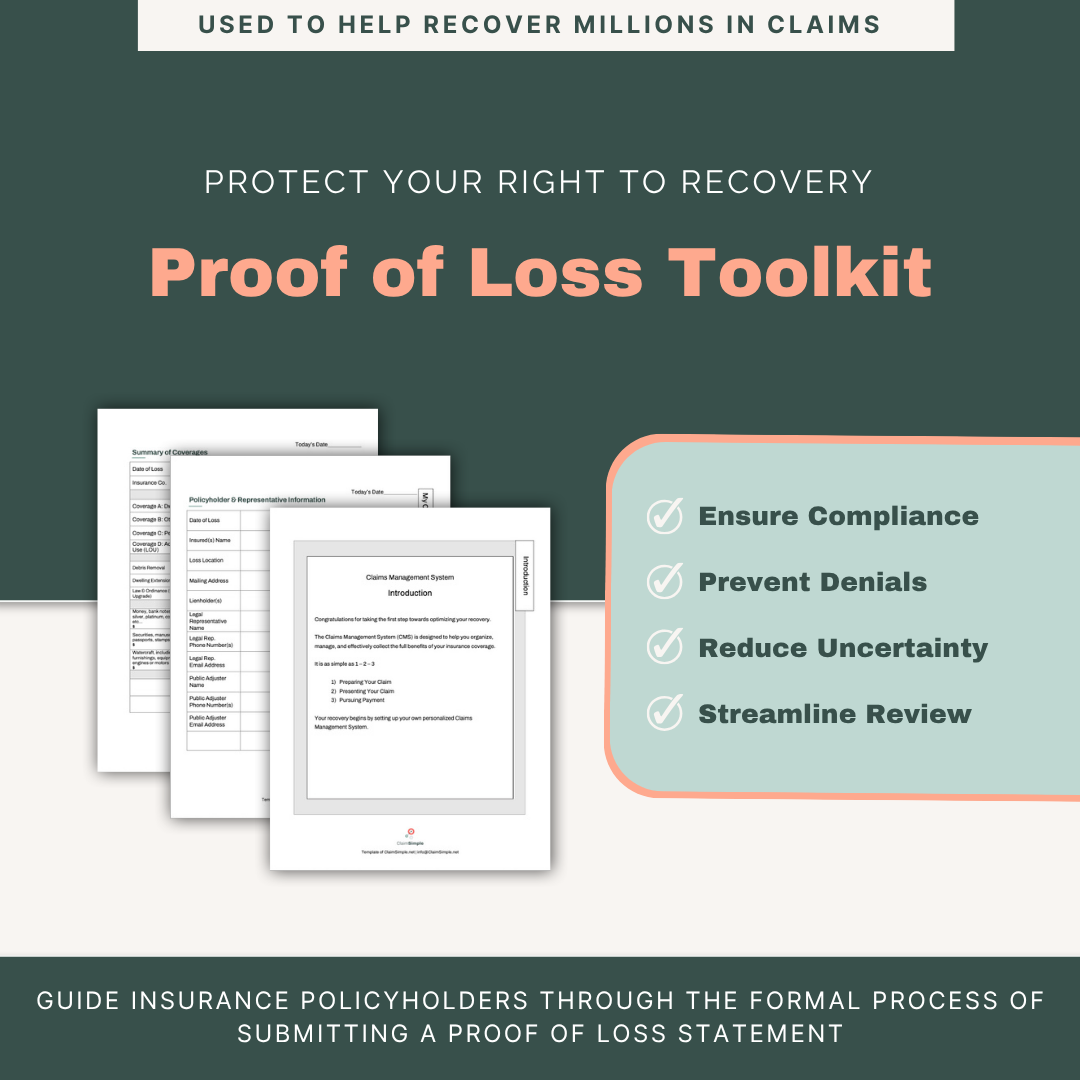
Document all loss, damage, incurred expenses, and everything else related to your insurance claim and recovery.
Insurance claims require tangible proof, so we will show you how to effectively document your claim with photos, videos, estimates, inventories, and expert reports.

Use Cases

  • The water damage from a broken pipe floods more of your home than expected and you intend to claim all the necessary repairs.
  • Your loss causes you to incur extra living and other claim-related expenses you can’t cover unless you are fairly and promptly reimbursed.
  • You are compiling contractor estimates that need to align with your actual loss, damage, and appropriate repair protocol.
STEP 4

Delays, Disputes, Denials

Is your adjuster ghosting you? Unhappy with the insurance company’s valuation of your claim? Wrongly or unfairly denied coverage? This stage of the critical path is upsetting, but you are not alone. You will have the tools for a successful resolution.

Use Cases

  • Your adjuster has not responded in weeks to your many calls, texts, and emails.  You need their active involvement to settle your claim.
  • The insurance claim settlement is nowhere near the repair costs quoted by every restoration contractor you contacted.
  • You received a denial of all or part of your claim, but your reading of the insurance policy tells you it should be covered.

STEP 5

Finalize Your Settlement

You are preparing to conclude your insurance claim, and you want to ensure that your final settlement will be accurate, thorough, and accesses all available insurance benefits.

Use Cases

  • The insurance company’s settlement may not address all of the loss and damage for which you are making a claim.
  • To conclude your settlement, the insurer requires your signature on documents that may affect your rights of recovery.
  • Your additional living expense coverage may run out before the reconstruction of your home can be completed.

STEP 6

Optimize Your Recovery

Your insurance company may be settled, but your recovery is still ongoing. This stage of the critical path is when you take back control of your life and your chosen future.

Use Cases

  • Your insurance settlement doesn’t cover the entirety of your reconstruction and recovery costs.
  • The claims process is complete, so you can now act upon the most advantageous use of your insurance proceeds.
  • As soon as you know the settlement amount, you will choose the contractor and agree on a reconstruction plan.
© 2025. ClaimSimple. All right reserved.

What You Need To Know About Insurance Claims

Don't let insurers undervalue your claim. Download our free guide to learn the critical steps to getting the full payment you're owed.
Lead Magnet Form